
Staying Strong As You Age: Strength Training For Women Over 50
At what age do we actually slow down?
It's a question many of us ask as the birthdays roll by, and I hear it most from women wondering whether it's too late to start. Here's my honest answer: strength training for women over 50 isn't just possible, it's one of the best things you can do for your body. Despite what the magazines might tell you, there isn't a magical age where everything suddenly goes downhill. Your body changes as you age, sure, but how you experience those changes is shaped far more by your lifestyle, attitude and daily habits than the number of candles on your cake.
In many ways, how you age is up to you.
Ageing Is Not the Problem, Inactivity Is
Many people assume that feeling weaker, stiffer, slower, and more tired is simply part of getting older. While some physical changes are inevitable, research consistently shows that much of what we blame on ageing is actually the result of reduced activity.
Muscle loss, declining balance, reduced flexibility, and decreased fitness often occur because we stop challenging our bodies, not because we reach a certain age.
The good news? The body remains remarkably adaptable well into our 70s, 80s, and beyond. It still responds to strength training, cardiovascular exercise, stretching, and healthy nutrition.
You Can Age With Power
Ageing doesn't have to mean becoming fragile. In fact, some of the strongest, most capable people you'll ever meet are in their 60s, 70s, and even 80s. And many of them are right here in our studio and online classes, showing us all up.
Powerful ageing means maintaining the ability to do the things you love:
Carry your own shopping bags (not that this is a great love of mine, to be honest; lucky Deb does most of the shop 😊)
Get up from the floor with ease
Travel confidently
Play with grandchildren
Garden, walk, dance, and even jump without fear
Strength training becomes one of the most valuable investments you can make as you age. Strong muscles support healthy bones, protect joints, improve balance, and help preserve independence. It's why I'm always encouraging you to try heavier weights in class, and why I talk so often about the importance of protein.
Rather than asking, "How old am I?" perhaps we should be asking, "How capable am I?"
Your Attitude Matters More Than You Think
Our mindset has a powerful influence on how we age. If you constantly tell yourself you're getting old, slowing down, or "can't do what you used to do," your actions often begin to follow those beliefs. On the other hand, when you value your health and believe that improvement is possible at any age, you're more likely to make choices that support your wellbeing.
Ask yourself:
What do I want my life to look like in 10 years?
What activities do I want to still be doing?
How do I want to feel each day?
The answers to these questions often determine the habits you choose today. You all know I'm 65, and many new people I meet are shocked by that. I actually feel fitter and stronger than I did at 35, and you can too. I refuse to be limited by my age, and you shouldn't either.
Building Resilience as We Age
Life inevitably throws challenges our way. Injuries, illness, menopause, family responsibilities, stress, and unexpected setbacks are all part of the journey. Resilience is the ability to keep moving forward despite those challenges.
You can build resilience by:
Staying physically active
Maintaining social connections
Setting meaningful goals
Practising gratitude
Being willing to adapt when circumstances change
Focusing on what you can do, rather than what you can't
Every workout completed, every healthy meal chosen, and every walk taken reinforces the message that you are capable and strong.
Don't Become a Victim of Time
Many people start measuring life by their age. "I'm too old to start." "I'm too old to lift weights." "I'm too old to learn something new."
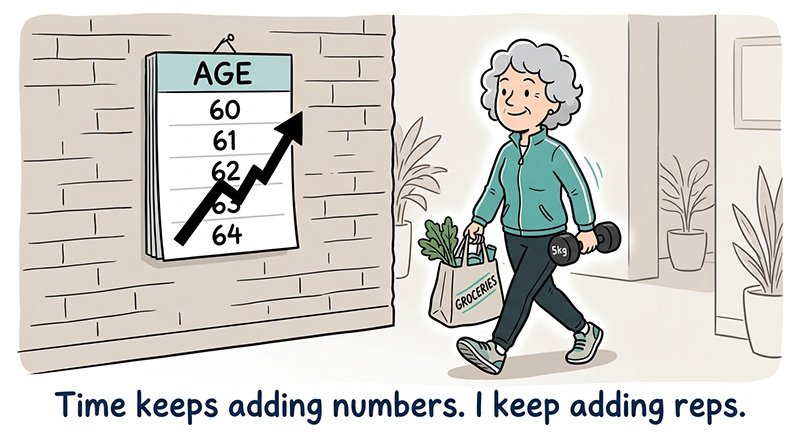
But time passes whether we take action or not. Five years from now, you'll still be five years older. The question is whether you'll be stronger, fitter, healthier, and more confident, or whether you'll have allowed time to dictate your future.
Age is a number. Function is what matters.
When Estrogen Walks Out the Door
For women, one of the biggest shifts often occurs during and after menopause. As estrogen levels decline, several changes can occur:
Loss of muscle mass
Increased body fat, particularly around the abdomen
Reduced bone density
Joint stiffness
Changes in sleep quality
Increased risk of osteoporosis
These changes can feel frustrating, especially when the strategies that worked in our younger years no longer seem effective. This is exactly why strength training, adequate protein intake, quality sleep, and regular movement become even more important.
Menopause is not the end of feeling strong and vibrant. It simply requires a different approach.
What About the Men?
While men don't experience menopause, they're not immune to the effects of ageing. From around the age of 30, testosterone levels gradually begin to decline, which can contribute to reduced muscle mass, increased body fat, lower energy levels, and slower recovery.
The good news is that many of these changes can be significantly influenced by lifestyle choices. Regular strength training, cardiovascular exercise, quality sleep, stress management, and a healthy diet can help men maintain strength, vitality, and independence for decades.
Just like women, the men who age best are often the ones who keep challenging themselves physically and mentally, rather than accepting that slowing down is simply part of getting older.
The Real Secret to Ageing Well
People who age well don't necessarily have perfect genetics. They simply keep showing up.
They move their bodies regularly
They challenge themselves
They stay curious
They keep learning
They maintain connections with others
They prioritise their health
Most importantly, they refuse to let age define what is possible.
So, At What Age Do We Slow Down?
The answer is simple. We start slowing down when we stop moving. The body is designed for movement. The more we move, the more capable we remain.
Whether you're 45, 55, 65, or 75, today is always the perfect time to invest in your future self.
Because ageing isn't about adding years to your life. It's about adding life to your years!
If you want to talk about your own fitness and strength goals, speak to me after class or give me a call. I'm always happy to help!