
Why Do I Always Feel Hungry?
Have you ever felt like no matter how much you eat, you’re still thinking about your next meal? You’re not alone. Constant hunger can feel frustrating, confusing, and sometimes even a little discouraging, especially when you’re trying to eat well and take care of your body.
Before we dive into the reasons why, let’s first understand what hunger actually means.
What Is Hunger?
Hunger is your body’s natural signal that it needs energy. It’s regulated by a complex system of hormones, like ghrelin, which tells you to eat, and leptin, which tells you you’re full. True hunger builds gradually and is your body’s way of asking for fuel.
But here’s the tricky part: not all hunger is physical. Sometimes what feels like hunger can be influenced by habits, emotions, or lifestyle factors.
Let’s break down some of the most common reasons you might always feel hungry and what you can do about each one.
1. Not Eating Enough Protein
Protein is incredibly satisfying and helps keep you fuller for longer.
Tip: Aim to include a source of protein in every meal. Think eggs, chicken, fish, Greek yoghurt, tofu, or legumes. A good rule of thumb is to build your meals around protein first.
I generally have a protein shake to kick off my day. It’s a quick, easy way to get a good dose of protein.
2. Eating Too Many Refined Carbs
Refined carbs, like white bread, pastries, and sugary snacks, digest quickly and can spike your blood sugar, leading to crashes that leave you feeling hungry again soon after.
Tip: Swap refined carbs for whole, slow-digesting options like oats, brown rice, quinoa, or wholegrain bread to help stabilise your energy levels. Try to include some protein every time you eat.
If you need a snack, my go-to these days is a handful of nuts, sometimes with a little protein pudding, or some slices of cheese with rice crackers or apple.
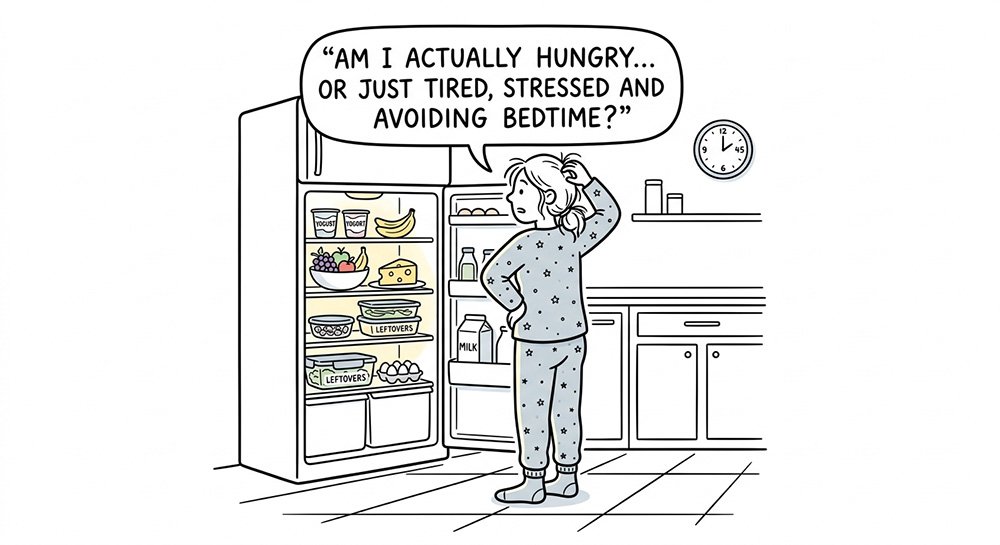
3. Not Getting Enough Sleep
Poor sleep disrupts hunger hormones, increasing cravings and appetite, especially for high-calorie foods.
Tip: Aim for 7 to 9 hours of quality sleep each night. Create a consistent bedtime routine and limit screen time before bed.
In fact, lack of sleep is now being rated as one of the most impactful things on our health, so it deserves your attention. Deb and I try to go to bed at 9.30pm every night, and the routine, as well as the early bedtime, really helps me.
4. Not Drinking Enough Water
Sometimes thirst is mistaken for hunger, and mild dehydration can trigger those “snacky” feelings.
Tip: Start your day with a glass of water and keep a bottle nearby. If you feel hungry, try drinking water first and see if the feeling passes. Try to aim for 8 glasses a day to stay well hydrated.
5. Consuming Too Much Alcohol
Alcohol can interfere with hunger hormones and lower your inhibitions, making it easier to overeat. You know what I’m saying. All of a sudden, that cheese platter is looking mighty yummy with that glass of wine, even if you’re not hungry!
Tip: Be mindful of your intake. Try alternating alcoholic drinks with water and avoid drinking on an empty stomach.
6. Being Stressed
Stress increases cortisol levels, which can drive cravings and increase appetite, particularly for comfort foods.
Tip: Build in simple stress-management habits like walking, deep breathing, stretching, or even just taking a few quiet minutes for yourself each day.
One of Deb’s things to do if she gets a bit stressed at work is to go for a 10-minute walk instead of reaching for that chocolate bar. This technique has really worked for her.
7. Not Eating the Right Kind of Fats
Healthy fats help slow digestion and keep you satisfied. Fat is not bad for you. Fat doesn’t make you fat, but all fats are not the same.
Tip: Include sources of healthy fats like avocado, nuts, seeds, olive oil, or fatty fish in your meals.
8. Exercising Excessively
While exercise is great for your health, doing too much without properly fuelling your body can increase hunger significantly.
Tip: Make sure you’re eating enough to support your activity level. Balance intense workouts with rest days and proper recovery nutrition.
And as I’ve mentioned before, women in particular need to have some protein before they exercise!
9. Not Getting Enough Fibre
Fibre adds bulk to your meals and slows digestion, helping you feel full for longer.
Tip: Fill your plate with vegetables, fruits, whole grains, and legumes. Aim to include fibre in every meal.
You’ll start to hear the new trend of “fibremaxxing” soon. You don’t need to go over the top, but fruits and vegetables, whole grains and legumes are great for filling you up and are great for your overall health.
10. Medical Conditions
Certain medical conditions or medications can increase hunger or affect how your body regulates appetite.
Tip: If your hunger feels excessive or out of control despite making lifestyle changes, it’s worth speaking with a healthcare professional for personalised guidance.
Final Thoughts
Feeling hungry all the time isn’t just about “lack of willpower”. It’s often your body trying to tell you something. Whether it’s your nutrition, sleep, stress, or lifestyle habits, there’s usually an underlying reason.
The good news? Small, consistent changes can make a big difference. Focus on nourishing your body with balanced meals, staying hydrated, prioritising rest, and listening to your hunger cues.
Because when you understand your body better, you can work with it, not against it.
FAQs
Why do I feel hungry even after eating?
You may not be eating enough protein, fibre or healthy fats, or your meal may be too high in refined carbohydrates. Sleep, stress, hydration and alcohol can also affect hunger.
Can lack of sleep make you hungrier?
Yes. Poor sleep can affect hunger hormones and increase appetite or cravings, especially for higher-calorie foods.
Can thirst feel like hunger?
Sometimes, yes. Mild dehydration can make you feel tired, foggy or snacky, so having water first may help you work out whether you’re actually hungry.
When should I speak to a doctor about hunger?
If your hunger feels excessive, sudden, unusual, or difficult to manage despite lifestyle changes, it’s worth speaking with a healthcare professional. Appetite changes can sometimes be linked to stress, medications or health conditions.