
Japanese Culture and Health Compared with Australia
Japan and Australia are both modern, developed countries, but they have some interesting differences when it comes to culture, lifestyle, and health.
As I head off to Japan for three weeks of rest, relaxation, adventure and some action, I wanted to understand a bit more about the Japanese culture as opposed to the Australian one, with a particular focus on diet and exercise. I don’t really know anything about Japan and it’s a very different country to others we have travelled to, so it was interesting to learn some information before I head off, and I thought I would share it with you all as well.
Japan vs Australia — A Quick Overview
Overall, Japan and Australia share a commitment to good healthcare and quality of life, but their approaches are shaped by different cultural values. Japan has a real focus on community, healthy eating, and preventive care, which contrasts with Australia's more individualistic, relaxed lifestyle and diverse cultural influences.
How Exercise Habits Differ
While both Japanese and Australians value health and physical activity, they often approach exercise and fitness in different ways.
In Japan, exercise is often built into everyday life rather than treated as a separate activity. Many people walk or cycle to train stations, schools, workplaces, and shops. Because public transport is widely used it is common for people to accumulate a significant amount of daily movement without specifically planning a workout. The focus is often on consistency, mobility, and long-term health rather than achieving a particular physique or working towards specific goals like we tend to.
In Australia, exercise is more likely to be a dedicated activity. Many Australians regularly participate in organised sports, gym workouts, running, swimming, cycling, or group fitness classes. Our outdoor lifestyle and climate encourage activities such as surfing, hiking, cycling and team sports. Fitness in Australia is often viewed as both a health goal and a recreational pursuit.
What About Strength Training?
Because of our new focus on strength in Australia (and other Western countries) I was interested to see if Japan had had this new focus too. I found out that when it comes to strength training, Australia generally has a stronger gym culture. Weight training, bodybuilding, powerlifting, and functional fitness programs have become increasingly popular, and many Australians now see strength training as an important part of improving fitness, appearance, athletic performance, and healthy ageing.
In Japan though, strength training is becoming more popular, especially among younger generations, but it has historically been much less of a focus. Traditional forms of activity such as walking, martial arts, stretching, and light recreational exercise have often been more common. There is also less emphasis on developing large amounts of muscle mass, particularly among older adults in Japan.
Moderation vs Performance
Another difference I discovered is the attitude toward moderation and longevity. Japanese fitness habits often align with the broader cultural philosophy of maintaining balance and supporting health over a lifetime. Australians also value long-term health, but fitness culture can sometimes place a greater emphasis on performance goals, personal achievement, or physical transformation.
Overall, the Japanese approach tends to focus on daily movement, consistency, and healthy ageing, while the Australian approach often involves structured exercise, sport participation, and strength training. Both approaches have benefits, and many health experts, including little old me 😊 would argue that combining the strengths of each—regular daily movement alongside dedicated strength and fitness training—creates an excellent foundation for lifelong health.
Comparing the Diets
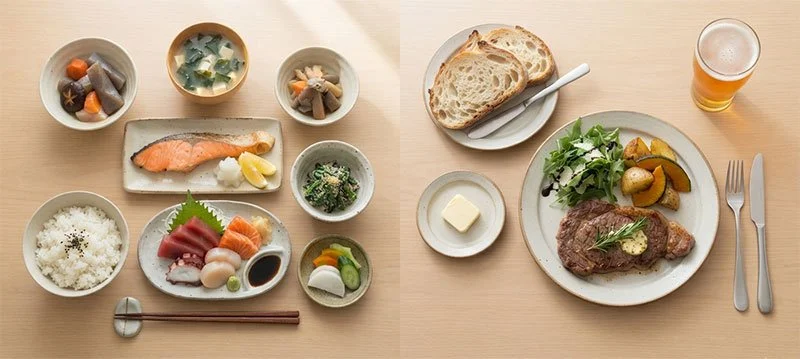
Our general diets are also completely different. The traditional Japanese diet relies heavily on rice, seafood, soy and seasonal vegetables served in small portions with minimal processing or dairy, while we know our general diet features a higher consumption of red meat, dairy, wheat-based breads and processed foods.
Life Expectancy — Who Comes Out Ahead?
I wondered if the differences in diet and exercise meant there was any difference in our life expectancy and quality of life as we age. I knew Japan had one of the highest life expectancies in the world (4th in world) and age 85 years, so I was curious as to how Australia would stack up. Interesting, the difference is only 1 year, because Australians are actually ranked 10th in the world with a life expectancy of 84.1 years. While advanced healthcare contributes to this in both countries, so do dietary habits and active lifestyles in both.
However! while Australians and Japanese people both enjoy long lives and access to excellent healthcare, older Japanese adults often experience lower rates of obesity and some lifestyle-related diseases. Australians, on the other hand, are more likely to require treatment for conditions such as heart disease, diabetes and obesity-related health problems. Cancer affects people in both countries, although Australia has particularly high rates of skin cancer.
What I'm Looking Forward to in Japan
So, I’m really interested to see these differences in real life when we get there! I am hoping to join some local groups exercising in parks (like we did in Vietnam) for some daily activity – and of course I’ll post photos and videos if we do, so follow me on Facebook while I’m away…. I’m also really excited to be eating Japanese food which mostly focuses on fresh, seasonal and minimally processed food and I’m super curious to see if my body feels different (better or worse) after 3 weeks of a mostly Japanese diet.
I’ll be sure to let you know when I get back!
Staying on Track While I'm Away
While I’m away, you can absolutely take the opportunity to rest, relax and recharge — your body needs that too!
But if you’re someone who likes to keep moving, I’ve got you covered! I’ve created a brand-new 30-Day Bodyweight Challenge that you can do anywhere, anytime — no equipment or gym required! You can purchase it HERE>
It’s perfect for keeping your body moving while I’m on holiday, when you’re travelling, or simply when you don’t have access to your usual workouts at the studio.
And here’s the bonus… for just $9.99, you’ll receive the 30-Day Bodyweight Challenge PLUS a FREE copy of my brand-new 8-Week Habit Challenge E Book!
That’s TWO new resources to keep you moving, motivated and on track for just $9.99! Now that’s a holiday bargain! 😊
And if you don’t already have them, why not add my 4-Minute or 10-Minute Workout E Books to your collection? They’re packed with quick, effective workouts that are perfect for those days when you’re short on time. Both are just $29 each and available from the shop on my website.
So, whether you choose to rest, relax or keep moving, make sure you look after yourself while I’m away.
I can’t wait to see you all when I get back!
Training resumes Tuesday 29th September!