
Too Hot to Train? How to Exercise Safely When the Temperature Soars
As we all know, Climate Change is impacting weather patterns, and we’ve been warned that some Melbourne days this year are going to get hot, hot, hotter! So, even while we have some rain this week, I thought it was time to start thinking about what you should do when we do get those super-hot days across this summer.
Should You Still Train When It’s Super Hot?
Many of you ask me “should I come to training” or “should I still work out” when it is predicted to be super-hot.
Because you all know me, the answer is usually ‘“focus on what you can do, not what you can’t”, and this even applies in the heat. I plan my sessions to accommodate the heat – easier sessions with limited cardio for example, but you also know your own bodies and you should make your own decision about training and consider the things that I have laid out below, as tools to help.
When it’s hot, your body must work harder to regulate its temperature. Your heart rate can rise, you can become dehydrated more quickly and the same workout that normally feels comfortable can suddenly feel MUCH harder. So, we all have to be smart about how we train in the heat. That doesn’t mean we should cancel altogether (but sometimes, we should), but we do need to look after ourselves and change the plan.
There is no “temperature level” where it becomes too high to train altogether – there are many things that can increase what we call the “heat risk”.
What Affects Your “Heat Risk” (It’s Not Just the Temperature)
Heat risk depends on several things, including your air temperature, humidity, airflow and ventilation, direct sun and radiant heat, how hard and how long you’re exercising, what you’re wearing, your age, health and fitness, and whether you’re used to exercising in the heat.
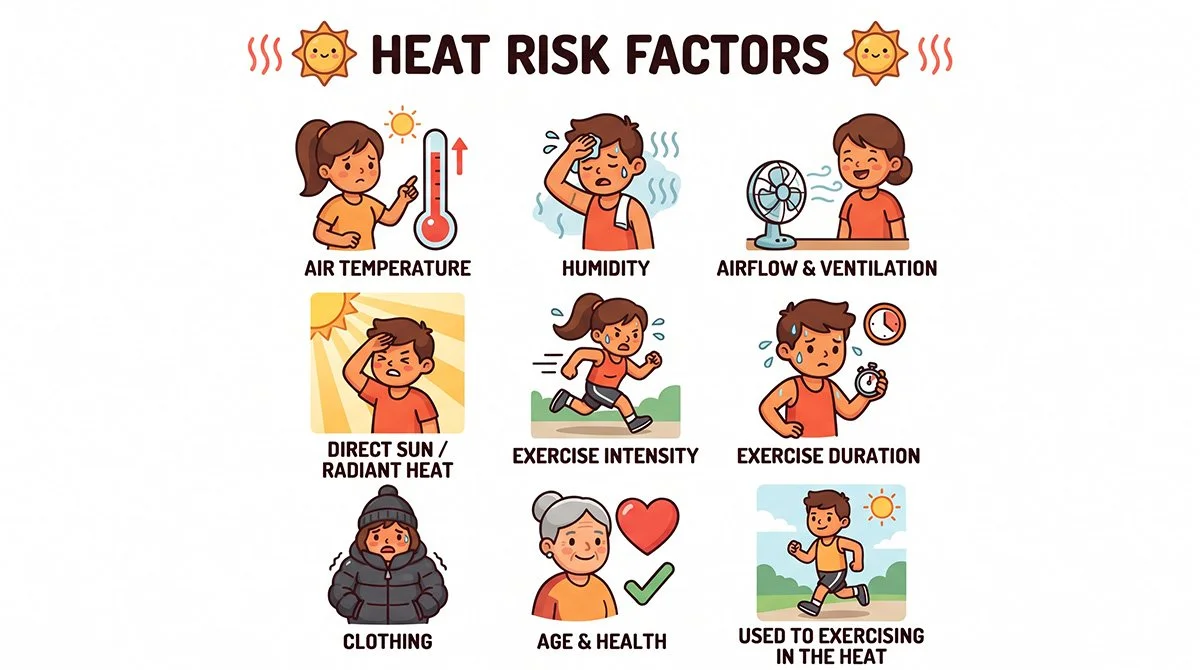
Sports Medicine Australia’s current guidance recommends looking at overall heat stress risk, rather than temperature alone. So, a good guide is to refer to the list above and consider what might be best for you. You can bank on the fact that I will always be adjusting the session to accommodate for the air temp, humidity, airflow and direct sun levels, as well as how hard the session will be - but the rest is up for you to add into the mix.
As a general guide, once temperatures get into the 31–35°C range, exercising becomes increasingly stressful for most people, and intensity and duration should be reduced, and I plan my sessions accordingly. At 36°C and above, particularly when humidity is also high, postponing exercise until a cooler part of the day is the safer option, and this is why our mid-morning classes sometimes get busier. From time to time, I might even cancel a session altogether if I think the risk factors are high for everyone, regardless of how I might modify.
And given we have a few people in the older age range, take note that if you're over 65, you need to be a little more careful. Older adults are more susceptible to heat-related problems because the body's ability to adjust to heat can decrease with age. So don't ever feel guilty about saying:
“It's too bloody hot today. I'm going to take it easy!”
That's not being lazy. That's being smart.
What happens to your body when you exercise in the heat?
When you're exercising, your body produces heat. Normally, your body cools itself through sweating and increased blood flow to the skin. But when it's hot - and especially when it's humid - your body has a harder time getting rid of that heat. That's why a workout that normally feels like a 6/10 can suddenly feel like an 8/10.
You may notice you’re sweating much more than usual, your heart rate is higher and you’re breathing harder. You might feel unusually tired, get a headache, or feel dizzy or light-headed. Some people develop muscle cramps, feel nauseous, or notice their coordination starting to suffer.
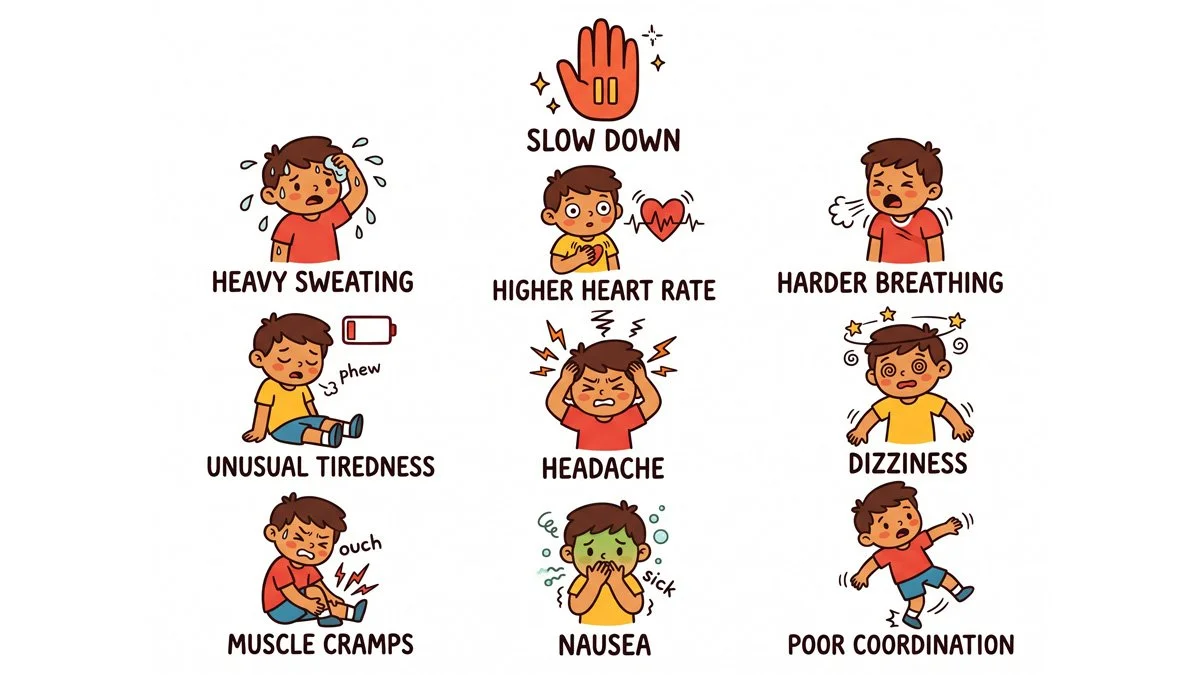
These aren't things to “push through”. They're your body telling you to slow it down a little.
Hydration Is Your Friend
Don't wait until you're absolutely gasping for water before you drink.
Try to start the day well hydrated and have water available before, during and after training.
And remember, hydration is important - but water alone doesn't magically make exercising in extreme heat safe. Rest breaks, cooling, appropriate clothing and reducing exercise intensity are all part of managing heat risk.
Know the Warning Signs of Heat Exhaustion
Heat exhaustion can cause symptoms including Headache, Dizziness, Weakness, Nausea, Excessive sweating, Muscle cramps, Feeling faint
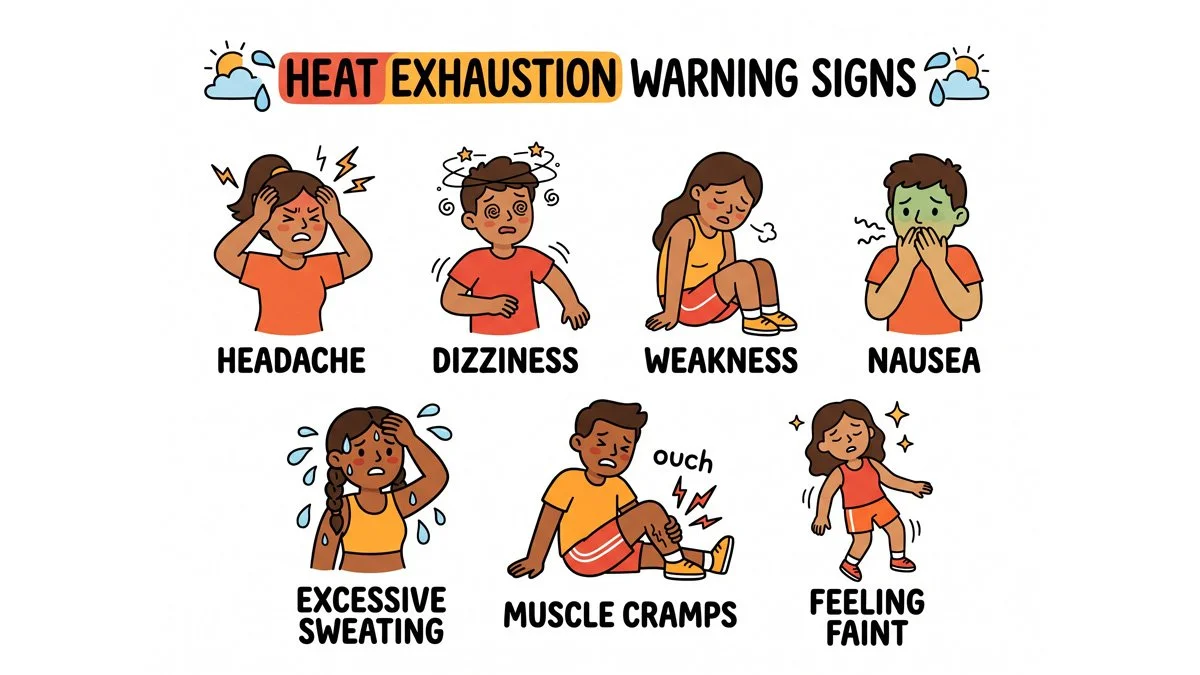
If these occur, stop exercising, move somewhere cooler, and if you’re at the studio, let me know. If you’re training online or somewhere else, do the same, and tell someone you’re with in case symptoms worsen.
Heatstroke: When It’s a Medical Emergency
Heatstroke is much more serious.
Warning signs can include confusion, altered behaviour, poor coordination, slurred speech, vomiting, loss of consciousness or a very high body temperature.
Heatstroke is a medical emergency. Call 000 immediately.
In Summary: How to Train Smart This Summer
I’ll be doing my bit to tailor sessions for the time of day, the temperature and the humidity – but you must do your bit too. Make sure you bring your water. Wear lightweight clothing. Know whether it’s a good idea for you to train today.
Cancel if you don’t feel up to it - there is always tomorrow.
Exercise is supposed to make us feel better - not leave us exhausted, dizzy and struggling to recover.
And especially as we get older, staying active is incredibly important, but how we train needs to evolve too.
Sometimes the best workout is a hard strength session.
Sometimes it's a 20-minute walk.
Sometimes it's mobility and stretching.
Sometimes it's a gentle workout in the air conditioning.
And sometimes...
it's sitting in the air conditioning with a cold drink and calling it recovery. 😂🥤
That's OK too!
Coach Cath ❤️
This article provides general fitness information and isn't a substitute for individual medical advice. If you have a medical condition, take medications that may affect your response to heat, or have concerns about exercising in hot weather, speak with your doctor or health professional.